 BroxtenDigital
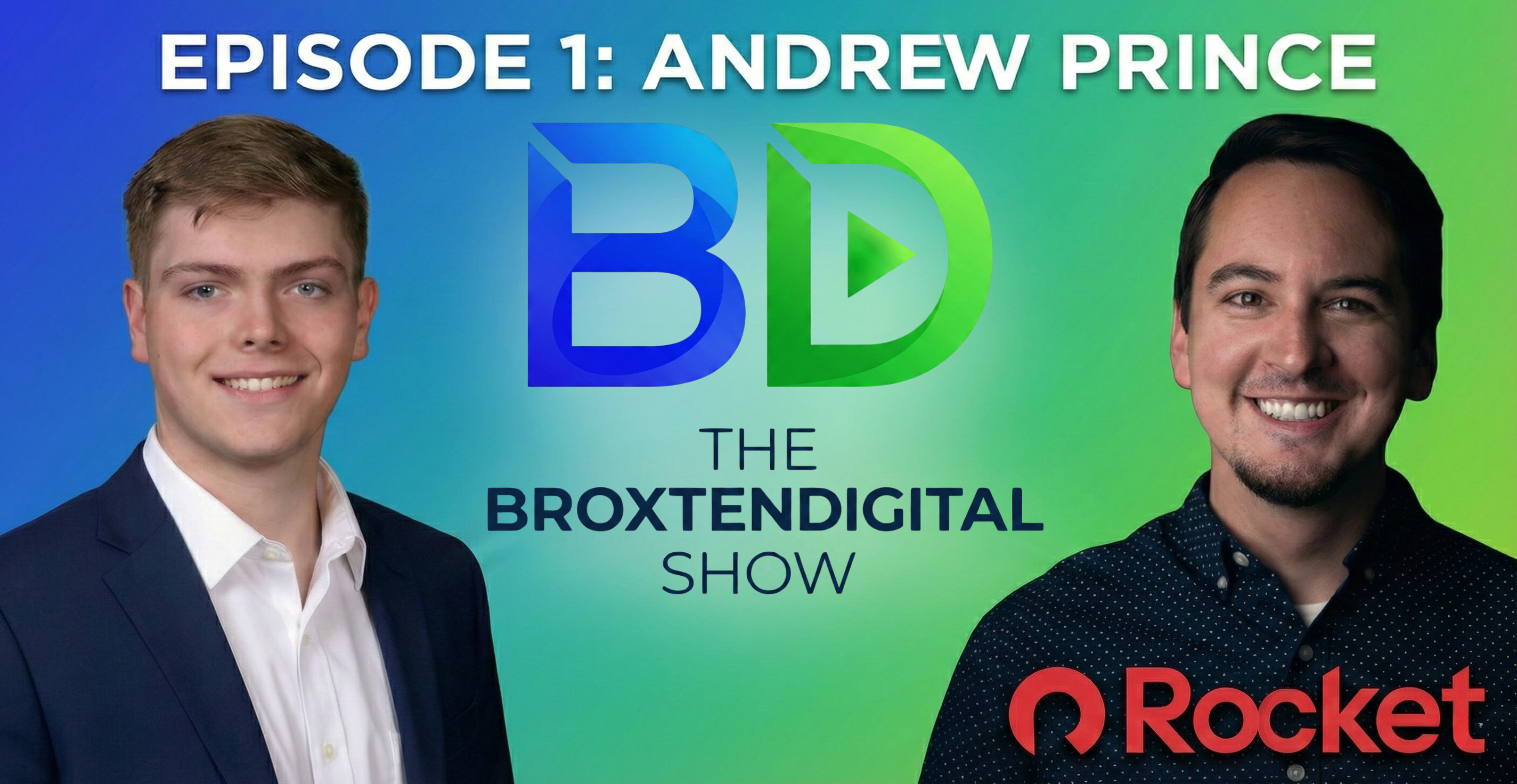
According to Andrew Prince, Senior SEO Manager at Rocket and Redfin with eight years in SEO, AI isn't going to replace SEO in the near term. He managed the SEO side of Rocket.com's 100-day rebrand leading up to the Super Bowl, so his take on search direction is grounded in real results.
Andrew was my first guest, and I was excited to finally sit down with him. He'd spoken in one of my Michigan State classes and I reached out to him on DM after that. A year and a half later, that message is still paying off for both of us.
Will AI replace SEO?
His answer is direct: "Pump the brakes on LLMs and AI search as far as being main traffic drivers." He doesn't think Google's AI mode overtakes the traditional search interface by the end of 2026, for two reasons: Google still has monetization to figure out, and most people, his own parents included, haven't changed their search habits yet.
Informational traffic has slipped over the last six to eighteen months, he's noticed, because more people are going straight to AI instead of researching on their own. He separates the shift from the idea that traditional Google links disappear entirely. He still sees people filtering AI out of their Google searches, which tells him traditional results are not going away yet.
New in the industry? I sit down with people a few seats ahead and bring back what they wish they knew in year one. Subscribe on YouTube.
How is AI changing SEO work?
Andrew uses AI to speed up nearly every step of his content process, from keyword research and audience research to content briefs, editing against a style guide, and parts of publishing. When it comes to writing, he draws the line. "I think that's a little spammy and that humans are still important in that phase."
Andrew's advice for students goes past the tools themselves: learn to automate a process. Build something on your own website using AI. Get to the interview and nail the explanation of what you built and why. That's going to outperform a resume with no internship every time.
Agency or in-house: where should you start in SEO?
Here's what Andrew says: agency first, because you're exposed to more clients, tools, and content systems in less time than any single in-house job. The tradeoff is what each side optimizes for: "The goal of an agency is not to succeed for their clients. It's to make their clients happy." In-house, the accountability is direct. Your channel has to hit results, or if the business isn't profitable, no relationship is going to save your position.
His trajectory is the playbook: agency roles, then in-house at a personal injury law firm (grew traffic six times with half the pages), then Wayfair, then Rocket. Starting wide and narrowing later worked for him, and it's the same order most people recommend when asked to redo their career.
How did one LinkedIn DM turn into a year of mentorship?
Andrew and I connected when he guest lectured for a class I was taking at Michigan State. Instead of waiting with all the other students after class, I reached out on LinkedIn, explained how we knew each other, what I wanted to learn, and asked if he had time for a quick call.
It's been about a year and a half and he's still one of my first calls when I need to walk through a website redirect. His take on why that kind of outreach works: "There are a lot of professionals who are willing to help students or young professionals navigate and understand things in the world." The relationship has become mutual too. He says he now learns as much watching my career as I once learned from his advice.
Watch the full conversation
Watch the full episode for the inside story of Rocket.com's 100-day sprint to a Super Bowl unveiling, how Andrew handles imposter syndrome on multimillion-dollar decisions, and his tips for starting a personal brand from zero.
Watch next: The BroxtenDigital Show - Episode 17: Dipa Gandhi
Over on LinkedIn, Andrew regularly posts about SEO and AI search. Subscribe on YouTube for the rest of the conversations behind this show.