 BroxtenDigital
Performance marketing is any kind of marketing where you spend money and you can tie that spend directly to a result, a lead, a sale, a sign-up, almost as soon as you make it. It is measured, not guessed at, and that is the entire point.
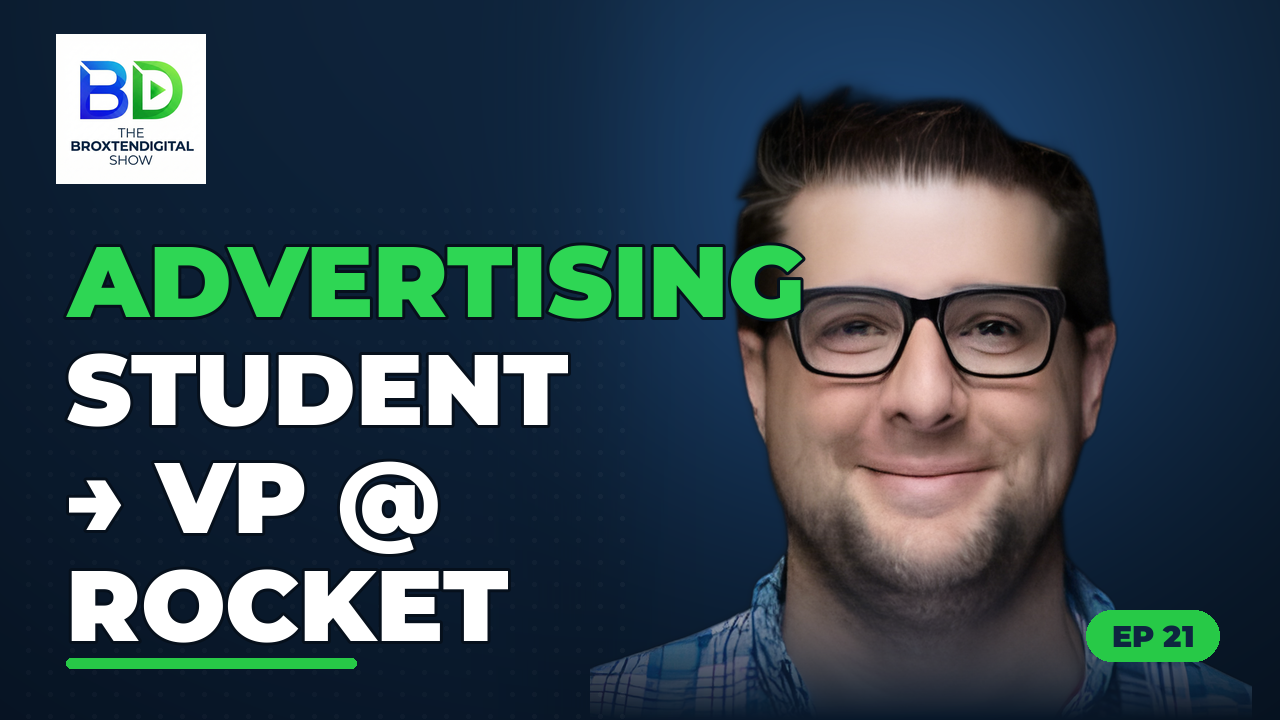
I asked John Vehlewald to break it down. He ran performance marketing for Quicken Loans and Rocket on his way to VP of Marketing at Rocket Pro, and he's a Michigan State alum like me, so I wanted the Spartan-to-Spartan version of how he built his career.
What is performance marketing?
John's first five or six years at Rocket were in performance marketing. After that, he moved up. No matter the channel, his definition sticks: performance marketing is marketing you pay for where you can directly connect your spend to what comes out of it.
As John put it, "You go to Google, you bid on keywords that drives traffic somewhere, you collect a lead or you get a sale." Spend a hundred dollars and sell fifty dollars worth of something, and that math stops working fast.
You'd be surprised how many channels count: paid search, programmatic display, direct mail, email, even buying leads from aggregators. John refers to it as a last-touch view. If you can see the dollar in the result, it counts.
New in the industry? I sit down with people a few seats ahead and bring back what they wish they knew in year one. Subscribe on YouTube.
Performance marketing vs brand marketing: what's the difference?
John's answer stayed inside performance marketing, so here's the plain-English split from my own seat as a performance media analyst. You buy performance marketing for a single direct outcome, measured on a timeline short enough that you know exactly what each dollar produced. Brand marketing builds awareness and preference over months, and it doesn't tie to a single conversion the way a paid search click does.
You need both if you want the business to work. If you want feedback fast, performance marketing is your lane: you get a number back in days or hours instead of waiting on a brand study to see if the work landed.
Big company or small company for your first job?
John doesn't hedge on this one. Two offers on the table, a big company and a small one, and his advice is to go big.
His reasoning: "I think the resources are probably a lot larger at a big organization and you're probably doing a bunch of different things." He remembers reps from LinkedIn, Facebook and Google walking into the office to pitch their platforms, something that rarely happens at a smaller shop. You get more space to move around and learn different parts of the business without needing to change employers.
You can still make it work at a smaller company. You just get better outcomes there later, after building your foundation somewhere with real resources.
What should your LinkedIn show while you job hunt?
John is job hunting again right now, after his role at Rocket ended in a round of layoffs tied to the mortgage market, not performance. Years away from posting, and now he's back on LinkedIn, deliberate about what goes up.
His take: "it definitely can't hurt, and it's a great way to showcase yourself and meet others." He posts what he's learned, what he's building, even a hobby, so someone gets a sense of him before an interview call. What he won't post is the venting: "don't use LinkedIn or Facebook or whatever as your therapy session."
That's the one that matters. Share what you're working on and what you're learning. Save the frustration for your friends.
Watch the full conversation
You can find the full episode with John Vehlewald on YouTube. In it, he shares how he taught himself to code with Claude and what he actually looks for in an entry-level hire beyond the resume.
Watch next: The BroxtenDigital Show - Episode 3: Alex Ryan
New in the industry? I sit down with people a few seats ahead and bring back what they wish they knew in year one. Subscribe on YouTube.