 BroxtenDigital
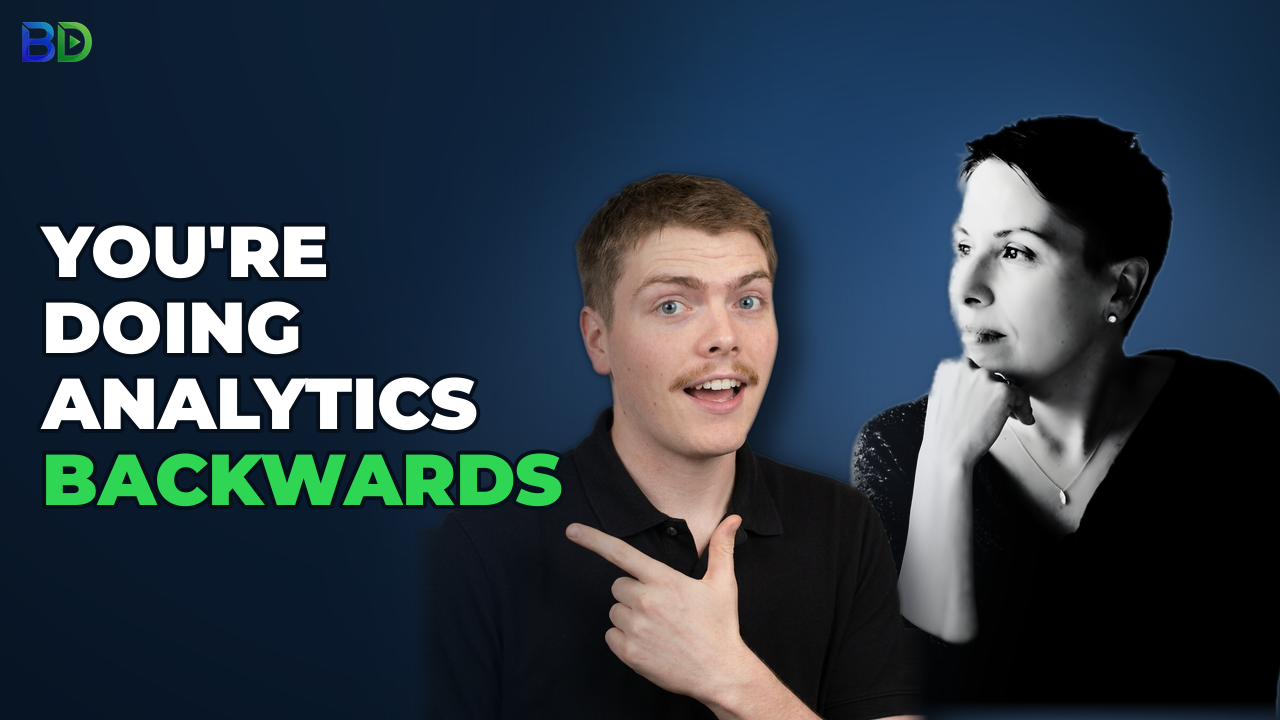
A head of analytics day in the life starts before anyone opens a spreadsheet. Charity Taylor, EVP of Analytics at Publicis Collective, spends the first part of any problem on one question: what decision are we trying to inform?
I had her on Episode 29 because the people I talk to, students and young professionals in marketing, rule analytics out before they try it. Charity has 20 years in automotive data behind her, at General Motors, J.D. Power, automotiveMastermind and S&P Global Mobility, and she is not a data scientist. She has an undergrad and a master's in finance.
What does a head of analytics do before touching the data?
"Data is important, but it's really only important to the extent that it can inform a better decision than you would otherwise make without it," she told me.
So her day starts with the problem statement. What is the decision? What signals would tell us to push the button, and what would tell us we absolutely shouldn't? Only then does she ask what information is available. "Most people get lost because they jump into the data to start with rather than crafting their game plan from the start."
The second habit is doubt. "Don't trust somebody else's interpretation of it," she said of any number you inherit. Ask how it is sourced, what the methodology is, and in her words, "How is this sausage made?"
If you are early in your career and analytics reads like a locked door, subscribe here. There is a new video every Friday.
Do you need to be technical to work in analytics?
No. "Sixth grade math can take you really, really far," she said. A basic grasp of algebra, maybe some statistics, and a lot of curiosity is the floor.
She proved it at J.D. Power, where she ended up leading the data operations team. "Most organizations don't appoint someone with a finance background to run their data ops teams." The team had the technical aptitude. What it lacked was the analytical lens and an understanding of what clients actually needed, and that is what she brought.
Her advice on how to build that lens? That's the most practical part of the whole episode. Take an analysis that is going to a client and "go present it to yourself in the bathroom. Just go stand in the mirror and present it to yourself." The questions a client would ask only occur to you once you try to say it out loud.
How accurate does data need to be?
"Every number we ever produced, we heard it here first, was wrong, in absolute," she said of the estimates the retail auto industry ran on. A number does not need to be exactly right to be good enough for a decision. "You can get into a perfect answer, but if it's six months too late, it's really not perfect data."
Trust, she said, "is a byproduct of transparency and a consistent level of quality and accuracy backed up by market validation." She also used what her team built every day, which is how she caught the problems herself.
What is the OMIT framework?
Ownership, Mastery, Initiative, Teamwork. They're the four legs of a chair, as Charity puts it. Lose one and "you're going to fail in some way, shape, or form."
Ownership is "I keep my promises." Mastery is understanding not just your role but what sits upstream and downstream of it. Initiative is "I see a need and I don't need to be asked to go off or to fill it." Teamwork means "no one struggles alone."
What I'm pulling from this: take the four pillars into your next one on one and ask your manager what good actually looks like on each one. The gap you find is the plan. One caution from her: "Initiative without mastery is akin to like running with scissors." She hires for initiative, though. Everything else she can cultivate.
Watch the full conversation
Head Of Analytics Day In The Life: What An Agency EVP Really Does
Watch next: What Does A Marketing Agency Do? An Agency Founder Explains
Subscribe to get more actionable advice from the best in advertising & marketing: https://www.youtube.com/channel/UCyRzVW-NdwVH2heV7ES0JdA?sub_confirmation=1