 BroxtenDigital
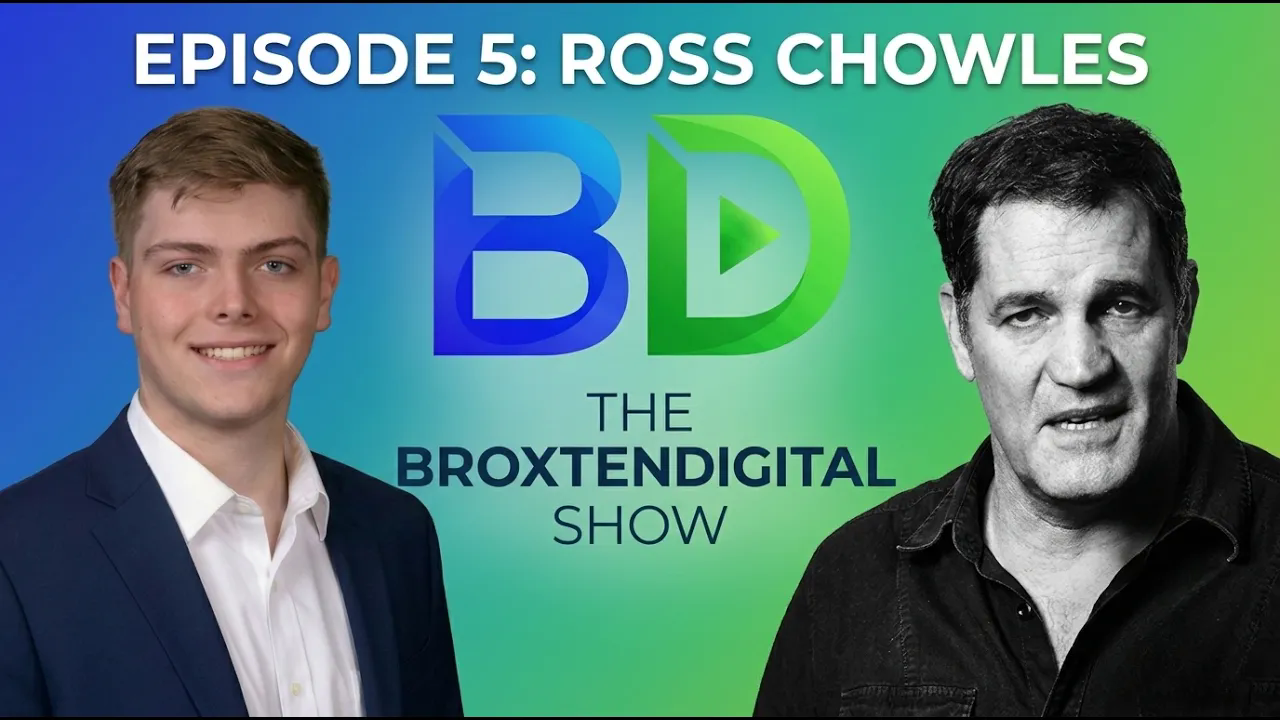
An advertising portfolio needs at least one piece of work bold enough to get you fired if a client ever actually ran it, according to Ross Chowles, who spent 22 years running The Jupiter Drawing Room in Cape Town and has judged Cannes Lions twice. He's spent nine years at Michigan State teaching students advertising and how to think like entrepreneurs.
I sat down with Ross because he led my entrepreneurship class, and it's still the one I think about most in my career. He took two people and no network, grew them into an internationally awarded shop, and then gave it all up to teach full time.
What should an advertising portfolio include?
Ross's standard is direct: "Do bold stuff. Every ad you do, think of one that'll get you fired. And that's the stuff that's gonna make you famous." He gives students the same task in class: make an ad that would purposefully get you fired, then let the reaction tell you if you actually pulled it off.
A student built Lava, a fictional fashion brand, and used AI so every model looked like flowing lava. Another painted his portfolio pitch on a giant canvas and mailed it to the museum he wanted to work for. Neither piece looked like anything else in a typical portfolio, which is exactly the point.
Trying to land your first role in advertising or marketing? Every episode is someone who built a career in this industry sharing what works. Subscribe on YouTube.
Why does safe work get ignored?
Reserved portfolio work doesn't get noticed, in Ross's experience, especially from students who default to what's expected instead of what's memorable. He kept coming back to the same advice, drilling it in: "Be bold, be bold, take risks, be bold."
If your work blends in, you lose, and nobody in a competitive field has time to wait around. AI can already produce competent, average work on its own, so competent and average is no longer a portfolio piece.
How do you land your first agency job as a student?
Ross doesn't dance around the numbers: there are more people looking for work than there are positions available. His read on the usual channels: "You can't rely on LinkedIn. You can't rely on an email. Nobody's reading emails. Nobody's picking up off LinkedIn." He tells students to show up in person instead, portfolio in hand.
Literally, that's what he means. The move: students bake a cake, get their portfolio URL in the icing, and hand deliver it to the agency. This student did the research on every director at the agency she wanted to join, drew portraits of each of them, and mailed them with her letter. She got the job.
How is AI changing creative work?
Ross notices three attitudes toward AI in the room, and frankly, one of them wins. "There's three attitudes to AI from the students. One is, I'm gonna use it to cheat. Two, I'm gonna use it as a labor saving device. Three, I'm gonna ride this horse. And those are the winners."
What the students are building here couldn't happen before, like taking a lava lamp and scaling it into a fashion line of AI models. Anyone using AI to produce safe, average work is training their own replacement, since safe and average is exactly what the tool already does on its own.
Watch the full conversation
Watch the full episode for the five traits Ross looks for before recommending a student for a job, why he thinks the best creative days are still ahead, and the free resources like OneClub.org he wishes he'd had at the start of his career.
Watch next: Breaking Into Advertising: What A Chief Creative Officer Screens For
He's active on LinkedIn, Instagram, Facebook and TikTok, and searching his name turns up plenty to explore. Subscribe on YouTube for the rest of the conversations behind this show.