 BroxtenDigital
Optimizing a Google Business Profile starts with the basics matching everywhere else your business shows up online, especially your business name on your own website. Before Google trusts what you enter, it checks it against outside signals, so consistency across the board matters more than getting one field perfect.
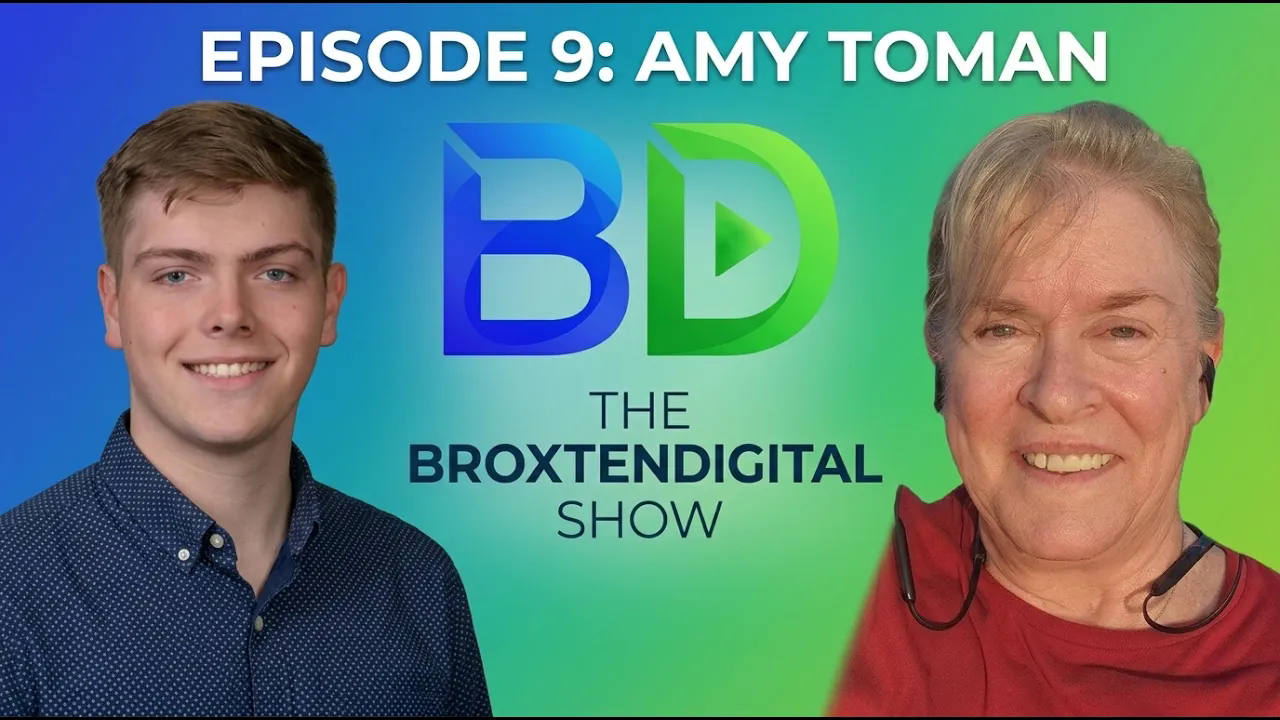
Amy Toman was the first woman named a Google Diamond Product Expert and now works at the GBP Experts, where she manages and troubleshoots Google Business Profiles full time. I asked her on the show because Google Business Profiles are her whole specialty, and she still takes free questions on Reddit and the Google forum most days.
How Do You Optimize a Google Business Profile?
Amy's core rule is that Google cross-checks what you claim against what it can find elsewhere on the web, not just what you type into the profile itself. If you fill in a field, it won't stick around.
The number one issue she runs into is a gap between the website and profile. "If your website does not have your business name on it, Google is not going to believe it's your website," she said.
She went tactical instead of clever. Your business name has to match exactly across the website and the profile.
Trying to land your first role in advertising or marketing? Every episode is someone who built a career in this industry sharing what works. Subscribe on YouTube.
Which Free Tools Should You Use To Learn Local SEO?
There's one tool Amy leans on, and she calls it the foundation of it all. "Screaming Frog is an absolute wonderful tool," she said, for crawling a site and seeing what's actually on every page.
From there she leans on Google's own free resources, like PageSpeed Insights for site speed, plus the r/GoogleMyBusiness subreddit, where she and other product experts answer detailed questions the official forum won't let you ask.
She'll send you to learningseo.io for structured learning. It's free, and she calls it a really great resource for learning SEO.
How Do You Find Your Niche in Digital Marketing?
Amy's own niche narrowed over years, from general SEO work down to managing nothing but Google Business Profiles. She didn't plan for it to narrow. It happened because she kept following what she was best at and who she trusted.
If you're still searching, her take is simple: quit sampling everything at once. "Figure out what is the thing that I really, really wanna do and make it your be all and end all," she said, then learn everything about it before moving to the next thing.
You're not throwing out the other stuff you know how to do. Amy maintains her SEO network even though her day-to-day is basically all Google listings at this point.
Should You Take Clients Before You're Ready?
Amy's answer is a flat no. "Don't get a freelance client until you know what you're doing," she said, because a botched site or listing can hurt a small business owner who trusted you to know better.
She thinks you should work under someone first, so when something breaks you know where to go. Building a free site for yourself, or for something small in your own neighborhood, teaches you the same lessons without a real client's business on the line.
Once you can explain what you did and why, and you know where to go if you screw up, that's when it's fair to start charging for it.
Watch the full conversation
Watch the full episode with Amy Toman on YouTube for more on the Slack communities and mentors who shaped her path in local SEO.
Watch next: The BroxtenDigital Show - Episode 12: Brad Wetherall
There's a new video every Friday with advice like this. Subscribe on YouTube.